Planning a kosher safari in Kenya can feel like solving two puzzles at once. You want the wildlife experience you have dreamed about, and you need to keep a kosher kitchen fully operational in the middle of the savannah. Both are possible. This kosher safari guide for Hebrew speakers explains exactly how.
As a Kenya ground operator, we work every week with travelers who keep strictly kosher. We know the camps, conservancies, and logistics that make it work. We also know the honest trade-offs no brochure will tell you.
Why Trust This Kosher Safari Guide for Hebrew Speakers?
We built this kosher safari guide for Hebrew speakers from direct experience, not from a brochure. Our team has coordinated mobile kosher kitchens, arranged Mashgiach supervision, and planned Shabbat schedules around game drives for years.
Is It Possible to Keep Strictly Kosher on a Kenya Safari?
Yes. Hundreds of observant Jewish travelers complete kosher safaris in Kenya every year. The key is the mobile kosher kitchen.
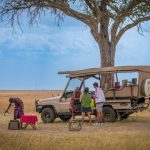
A reputable kosher safari operator brings a dedicated kitchen truck, with its own cookware, dishes, and cutlery, separate sets for meat and dairy, and a designated Pareve section. Nothing from the lodge kitchen touches your food.
A Mashgiach travels with your group and supervises all food preparation, checking ingredients, certification, and the separation of meat and dairy throughout the trip. The lodge provides the dining space and support staff, while your Mashgiach and private kosher chef handle everything else.
Most operators use Glatt Kosher meat. Many can arrange Mehadrin certification for travelers who need the highest standard of supervision. Ask your operator about Mehadrin at the planning stage.
How Do Kosher Safaris Handle Shabbat in Remote Bush Camps?
This is the question we hear most, and it is a fair one. Shabbat in the bush needs planning, but it works well.
Your itinerary is built around Shabbat. On Friday afternoon, game drives finish early, often by mid-afternoon, and the camp prepares a proper Shabbat dinner. Candle lighting happens on time, often with a pre-set candlestick holder, and Kiddush uses grape juice or kosher wine brought in by the operator.
Shabbat morning follows the same pattern: a late breakfast, an optional short walk with a guide, Torah reading if you have a minyan, and lunch. Havdalah takes place after sunset on Saturday evening.
The conservancy model makes this easier. In private conservancies like Naboisho and Mara North, you are the only group in that area, and the camp controls its own schedule. In the public Masai Mara Reserve, the flow of vehicles and lodge routines is less flexible.
Some camps set up a dedicated prayer space, while others use the tent or lounge. With ten men, a minyan is possible, and a Hebrew-speaking guide can help lead parts of the service. Most operators carry a Torah scroll and siddurim in the support vehicle. Confirm this with your operator before you book.
What Is the Best Time of Year for a Kosher Safari in Kenya?
Here is the honest trade-off no agency page will spell out. The Jewish calendar and Kenya’s wildlife calendar do not line up neatly.
Rosh Hashana and Sukkot land in late September and October, the peak months for the wildebeest migration in the Masai Mara, when river crossings happen almost daily. It is also the busiest and most expensive season, and camps fill up months in advance.
Pesach falls in March or April, during Kenya’s long-rains season. Wildlife viewing is still good, but the migration herds are in Tanzania’s Serengeti. Prices drop, camps are quieter, and you may have large areas to yourself. Read our guide to the best time to visit the Mara for more on how the seasons compare.
| Season | Timing | Migration status | Crowd level | Indicative price (per person, per night) |
|---|---|---|---|---|
| Sukkot / Rosh Hashana | Late September to October | Peak river crossings in the Masai Mara | Busiest of the year | USD 800 to 1,200 |
| Pesach | March to April | Herds mostly in Tanzania’s Serengeti | Quiet, camps often near empty | USD 400 to 600 |
These are indicative ranges. Rates vary by camp and operator. If the migration is your priority, Sukkot is unbeatable. If you want a quieter, more private trip at a lower price, Pesach is the smarter choice.
Which Conservancies Work Best for a Kosher Kitchen and Shabbat?
Private conservancies are the best choice for kosher travelers. They have stricter vehicle limits and lower visitor numbers, which matters for Shabbat scheduling and for wildlife viewing.
The Masai Mara National Reserve is public. Anyone with a park entry ticket can drive through, and on busy days you may see many vehicles around a single lion pride. The Reserve also has fixed lodge routines, which can complicate Shabbat timing.
Naboisho Conservancy, Mara North Conservancy, and Ol Pejeta Conservancy work differently. These are community land-lease models: Maasai landowners lease their land to conservancy management, and the daily conservancy fee you pay goes directly to the community.
In these conservancies, the number of beds is capped, which limits the number of vehicles. Your camp can schedule drives flexibly, making it easier to have a late Friday start and an early Shabbat end.
Ol Pejeta has another advantage. It is home to the last two northern white rhinos on Earth, under armed protection, plus a strong black rhino population. Its management team is experienced with special dietary needs.
Amboseli National Park offers the classic view of elephants against Mount Kilimanjaro, but it is a public park, similar to the Mara Reserve. Shabbat logistics are more limited there, so use it for a short leg of the trip rather than the core.
What Wildlife Will I See, and When?
Kenya’s wildlife is spectacular year round. The question is which wildlife, and where.
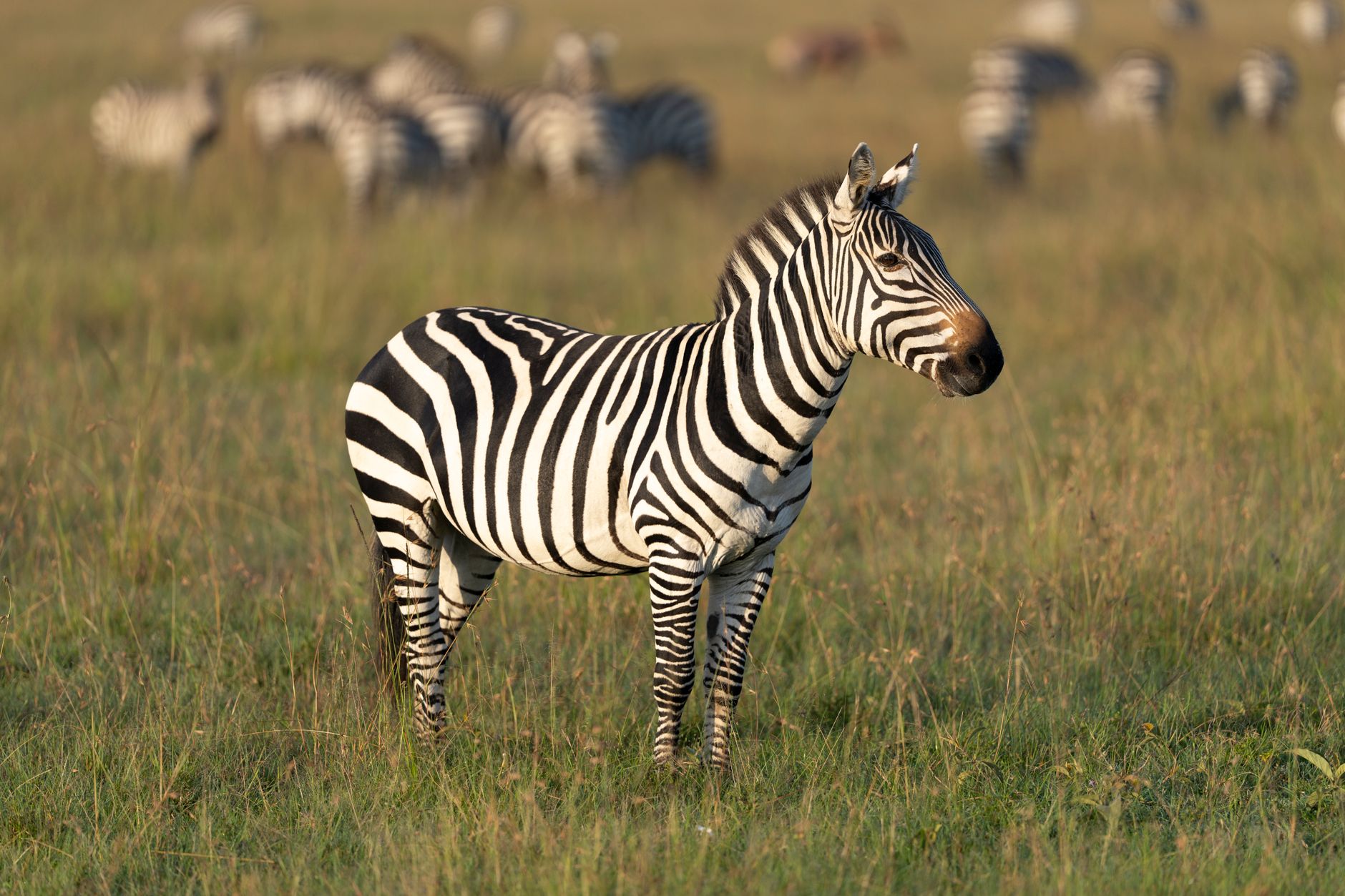
Great Migration crossings peak between August and October in the Mara, as wildebeest, zebra, and Thomson’s gazelle cross the Mara River while crocodiles wait. Predator action is intense, with lions hunting almost daily.
Big cats are visible all year. In the Mara, lion prides den in the long grass between January and March, when cubs are born and visible. Leopards are harder to spot, but the riverine forests of the Mara and the rocky outcrops of Samburu offer good chances.
Elephants are a highlight in Amboseli and Samburu, where large resident herds gather against the backdrop of Kilimanjaro. Samburu also has Grevy’s zebra, reticulated giraffe, and the beisa oryx, species found almost nowhere else in Kenya.
Rhinoceros at Ol Pejeta are a rare sight most visitors to Kenya miss, with both black and white rhino present alongside the last northern whites. Birds are exceptional too: Kenya holds well over a thousand recorded species, and Lake Nakuru alone hosts flamingos, pelicans, and fish eagles.
Do Israeli Citizens Need a Visa for Kenya, and How Much Does It Cost?
Yes. Israeli citizens need an eTA, the electronic travel authorization, before arrival, and there is no visa on arrival.
The eTA application is done online through the official Kenya eTA portal. As of 2026, the fee is listed at around USD 30, though you should confirm the exact amount on the portal since fees can change. Processing time is typically a few working days, but this can vary, so confirm the current turnaround on the portal and apply at least two weeks before travel.
Your passport must be valid for at least six months beyond your entry date, with two blank pages for entry stamps.
Is There a Jewish Community in Nairobi or Mombasa?
Yes, small but active. Nairobi has the Nairobi Hebrew Congregation, the oldest synagogue in East Africa, with regular Shabbat and holiday services. This is useful if you arrive on a Friday and need a place for prayer.
Mombasa has a historic Jewish cemetery but no functioning synagogue today, and its Jewish community is very small.
For a safari, do not rely on city congregations. Your kosher kitchen and Mashgiach travel with you into the bush, so the city community is a bonus, not a necessity.
What Vaccinations and Health Preparations Do I Need?
Yellow fever vaccination is required for entry from most countries. Carry your yellow fever certificate with you, since the eTA application may ask for proof.
Malaria is present in most safari areas. Take antimalarial medication as prescribed, use mosquito repellent at dawn and dusk, and sleep under a treated net.
Other recommended vaccinations include typhoid, hepatitis A, and hepatitis B. Consult a travel clinic six to eight weeks before departure.
Is Kenya Safe for Israeli and Jewish Travelers Right Now?
Kenya has a strong record of hosting travelers of all backgrounds. Tourism is one of the country’s largest industries, and the government invests heavily in visitor security. Most safari areas, including the Masai Mara, Naboisho, and Ol Pejeta, have very low crime, and the main risks are wildlife-related, not human.
That said, follow standard travel advice: use airport transfers arranged by your operator, avoid walking alone in Nairobi at night, and keep your passport and valuables in the camp safe. Many Israeli and Jewish tour groups complete their safaris without incident. Check your home government’s travel advisory before booking, and listen to your ground operator’s advice.
How Much Does a Kosher Kenya Safari Cost Compared to a Standard One?
A kosher safari costs more than a standard safari. The mobile kitchen, the Mashgiach, and the private chef add extra staff and equipment on top of the normal safari team.
For a high-end mobile kosher safari in a private conservancy, budget roughly USD 1,000 to 1,800 per person per night. This covers the camp, all meals, conservancy fees, the kosher kitchen, and the Mashgiach. A standard non-kosher safari in the same conservancy might cost USD 500 to 900 per person per night. The difference is real but not extreme.
The cost drops if you share the kosher kitchen among a group. A group of six to ten people splits the kitchen cost more effectively, while solo travelers pay the highest premium.
Do I Need a Hebrew-Speaking Guide?
Not necessarily, but it helps. Most safari guides speak excellent English, and some speak Hebrew as a second language, especially those who work regularly with Israeli tour companies.
If Hebrew matters to you, request a Hebrew-speaking guide when you book. For Shabbat services, a Hebrew-speaking guide can also help lead parts of the liturgy.
How Far in Advance Should I Book a Kosher Safari?
Book early. The kosher kitchen must be scheduled, the Mashgiach confirmed, and the chef hired, and this takes planning. For peak migration season around Rosh Hashana and Sukkot, book 12 to 18 months ahead. For the shoulder season, 6 to 9 months is reasonable.
Camp availability in the Mara during Sukkot is extremely tight. Private conservancy camps are small, often six to ten tents, and they sell out fast, along with Ol Pejeta and Naboisho.
What Should You Keep in Mind Before You Book?
A kosher safari in Kenya takes more planning than a standard trip, but the pieces are well established. Confirm your Mashgiach and mobile kitchen arrangements first, since those decisions shape the rest of the schedule.
Then choose your season and conservancy based on what matters most to you: the drama of the migration, or a quieter and more private camp. Talk to your operator early about Mehadrin certification, Hebrew-speaking guides, and the Shabbat routine at your chosen camp.
How Do I Compare Kosher Safari Operators?
Kosher safari operators differ in kitchen setup, Mashgiach arrangements, and camp partnerships. Ask direct questions about Mehadrin certification and Hebrew-speaking guides before you decide.
Compare safari operators through FindMySafari, Valley Safaris, or Trunktrails Safaris to see how kosher-friendly packages differ. Trunktrails also publishes a Masai Mara Great Migration guide worth reading before you book, and Valley Safaris lists its current tour packages for reference.
More safari planning resources
- Kenya national parks map from SafariPure
- Masai Mara Great Migration guide from Trunktrails Safaris
- Kenya tour packages from Valley Safaris
- Great Migration safari collection on FindMySafari
Related guides: 16 Things to Know Before Your First Kenya Safari Trip, Aberdare vs Mount Kenya National Park: Which Should You Visit?, AI Safari Trip Planners: Useful Tool or Overhyped for Kenya Travel?.